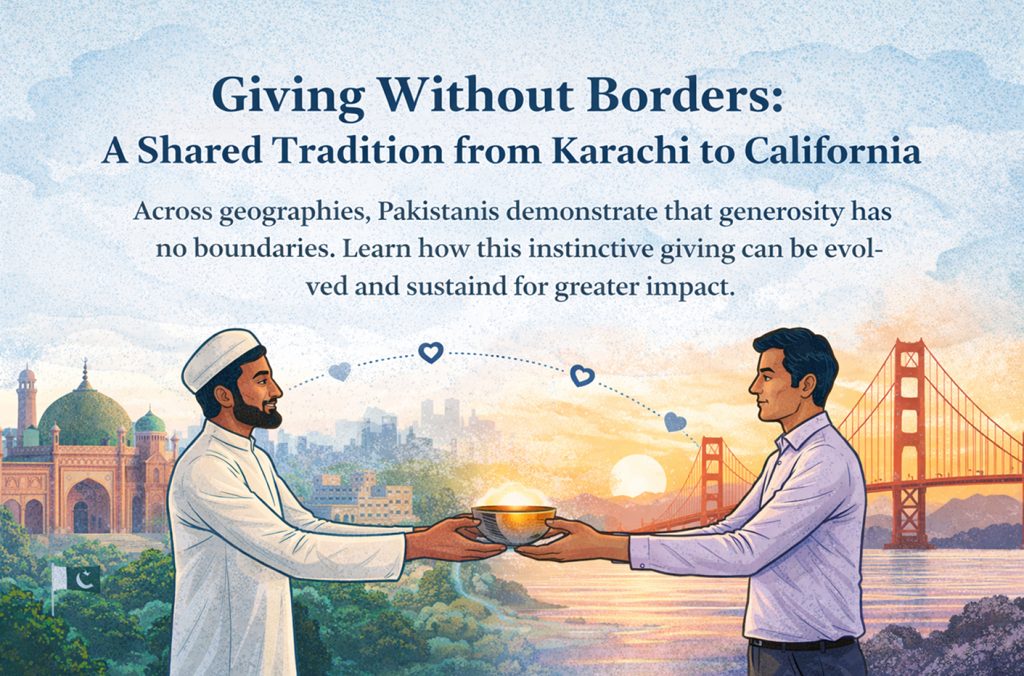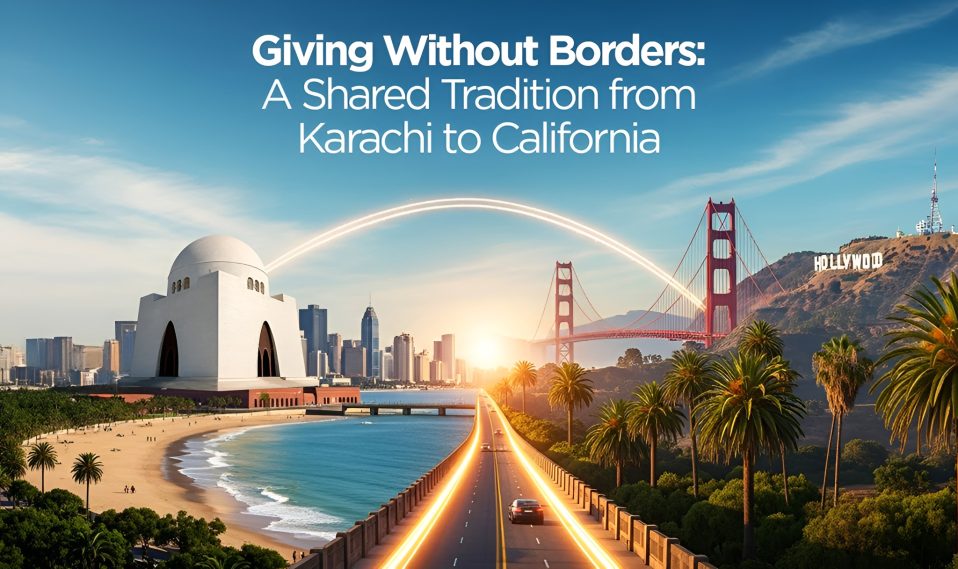
In a world facing deepening humanitarian crises and economic instability, generosity is often tested.Yet, for Pakistanis, both at home and abroad, giving remains deeply ingrained in everyday life.
Whether through Zakat, donations, or quietly helping someone in need, Pakistanis continue to give not as an occasional act but as a moral responsibility. And as the latest data shows, this tradition doesn’t stop at borders; it travels with the diaspora.
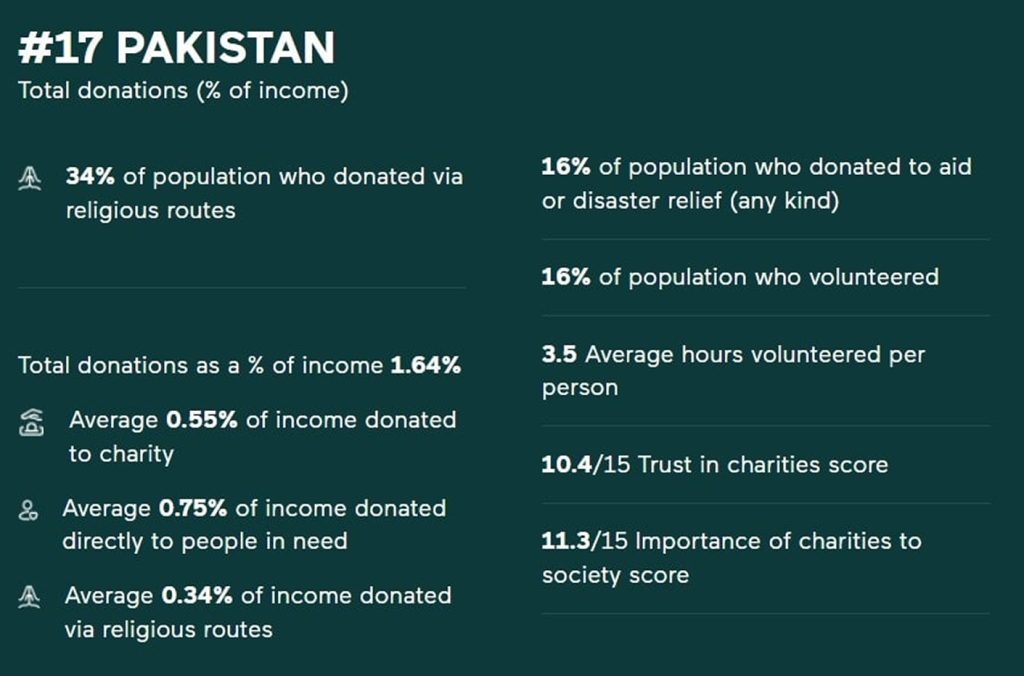 Pakistan Giving Landscape 2024 (Adapted from data in Pakistan Giving Report 2025, Charities Aid
Foundation CAF and Pakistan Centre of Philanthropy
A Generous Nation, Anchored in Faith
The Pakistan Giving Report 2025 confirms what many already sense intuitively: Pakistan is among the world’s most generous societies.
- 73% of Pakistanis donated money in 2024, well above the global average of 64%.
- Pakistan ranks 17th globally in both perceived generosity and the actual proportion of
income donated. - On average, Pakistanis give 1.64% of their income, significantly higher than the global
average.
What makes this generosity distinctive is how it is felt.
Generosity here is not performative — it is principled.
Where Giving Happens, and Why It Matters
Despite this generosity, the way people give tells a more complex story.
- 44.7% of donations go directly to individuals in need
- 33.8% flow through charities
- The rest goes to religious causes.
This reflects a culture rooted in personal trust and proximity, prioritizing the needs of neighbors,relatives, and community members.
While direct giving meets urgent needs, it also highlights a gap: informal generosity struggles to scale
into long-term solutions.
Diaspora Giving: Identity, Trust, and Impact
For Pakistanis living abroad, giving back is more than charity; it’s a way to stay connected to home.
Research on diaspora philanthropy shows that:
- A substantial majority of overseas Pakistanis see giving to Pakistan as part of their identity
and responsibility - Healthcare, education, and poverty alleviation consistently rank as top priorities
- Trust and transparency are the most significant barriers
Distance changes the equation. Informal giving becomes increasingly challenging, and donors are seeking credible, accountable pathways to ensure their contributions have a real, lasting impact.
Closing the Giving Gap
Here lies the opportunity.
Pakistanis already give often and generously. What’s needed now is a shift from reactive giving to intentional, strategic philanthropy, without losing the compassion at its core.
Platforms like the i-Care Foundation help bridge this gap by:
- Vetting nonprofit partners
- Offering transparency and accountability
- Enabling tax-compliant giving for diaspora donors
- Turning generosity into sustained impact
The future of giving isn’t about giving more — it’s about giving smarter.
A Call to Legacy
As 2025 draws to a close, the question is no longer whether Pakistanis will give. The data is clear;they already do, consistently and generously, even in the face of economic uncertainty. The real question is how that generosity will be shaped.
Will it remain informal and reactive, meeting immediate needs one family at a time?
Or will it evolve into a force that builds systems, strengthens institutions, and delivers lasting change for generations to come?
For Pakistanis at home and across the diaspora, this moment offers a choice: to move from instinctive giving to intentional generosity. Giving is grounded in trust, guided by transparency, and
aligned with long-term impact.
From Karachi to California, giving remains a shared tradition.
What comes next is a decision to turn that tradition into a legacy, one that outlives borders, moments, and individual acts and becomes part of the future we collectively shape.